Introduction
Scaling social media output presents a significant challenge for agencies aiming to enhance their clients’ online presence. By defining clear objectives and leveraging analytics, agencies can streamline their efforts and significantly boost engagement and conversion rates. But how can agencies effectively balance creativity with data-driven strategies to achieve maximum impact in an ever-evolving digital landscape?
This question is crucial as the digital landscape continues to shift. Agencies must not only adapt but also innovate, ensuring that their strategies resonate with audiences. Implementing best practices is essential, but the real challenge lies in integrating creativity with analytical insights.
Consider this: agencies that successfully merge these elements can create compelling content that not only captures attention but also drives action. The key is to harness data to inform creative decisions, ensuring that every post, tweet, or story is not just engaging but also strategically sound.
As we delve deeper into this topic, we will explore actionable insights that can help agencies navigate this complex terrain, ultimately leading to enhanced online presence and measurable results.
Define Clear Objectives for Social Media Campaigns
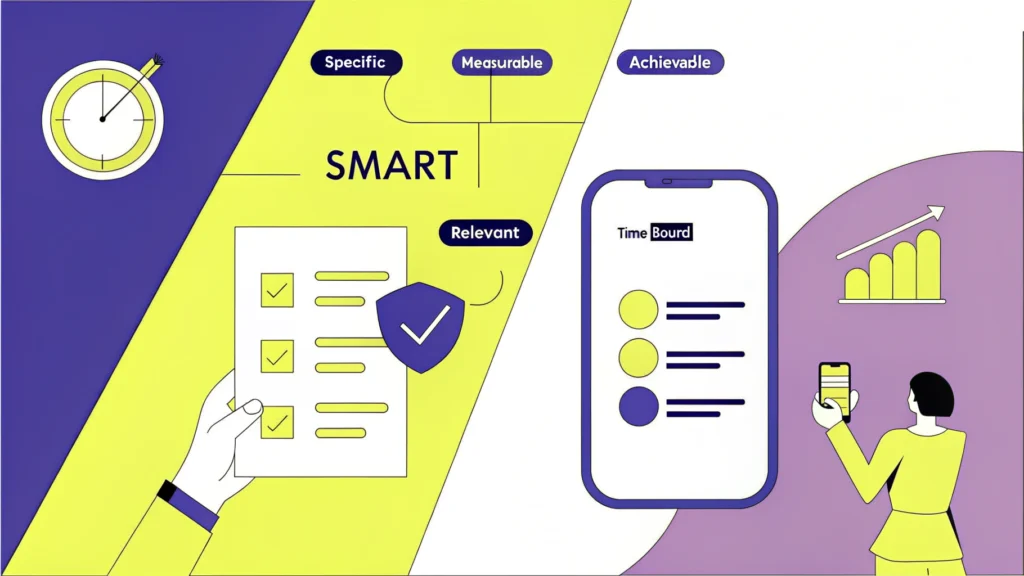
To effectively scale social media output, agencies require agency support for scaling social media output by establishing clear, measurable objectives for their campaigns. The SMART criteria – Specific, Measurable, Achievable, Relevant, and Time-bound – provide a robust framework for formulating these objectives. Instead of setting a vague aim like ‘boost interaction,’ a more precise target would be ‘increase Instagram interaction by 30% over the upcoming quarter.’ This specificity not only clarifies the target but also facilitates tracking progress and evaluating success.
Research shows that 65% of marketing leaders prioritize direct connections between social media campaigns and business goals. This statistic illustrates how SMART goals can enhance alignment with broader objectives. Involving stakeholders in the goal-setting process further enhances the campaign’s relevance and impact, ensuring that all efforts contribute meaningfully to overarching business aims.
Effective campaigns that adhere to SMART criteria, including those that benefit from agency support for scaling social media output and leveraging user-generated content, have demonstrated significant improvements in interaction and conversion rates. This highlights the efficacy of this strategic approach. As Kristina Knut, a Social Media Manager, aptly states, ‘Your goals need to be SMART – specific, measurable, achievable, relevant, time-bound.’ At Fresh Content Society, we believe that success begins with a solid strategy that sets clear goals and KPIs, alongside a deep understanding of your target audience.
Utilizing tools like Sprout Social can further assist in tracking these metrics, ensuring that agencies can measure their success effectively. Are you ready to elevate your social media strategy? Start by implementing SMART goals today.
Utilize Analytics to Drive Data-Driven Decisions
Agencies must leverage advanced analytics tools to track key performance indicators (KPIs) like interaction rates, click-through rates, and conversion metrics. By consistently analyzing this data, agencies can pinpoint which types of content resonate most with their audience, enabling strategic adjustments. For example, if a particular post format generates higher engagement, agencies should consider increasing the frequency of similar content.
Moreover, executing A/B testing across different methods can yield essential insights into effective practices, fostering ongoing enhancement and optimizing resource allocation. This data-driven approach not only boosts campaign performance but also aligns marketing efforts with audience preferences, ultimately driving better results.
At Fresh Content Society, we excel in maximizing organic reach with agency support for scaling social media output through tailored strategies for platforms like Instagram, TikTok, and Facebook. Our daily content creation and publishing are designed to engage communities effectively with agency support for scaling social media output, utilizing formats such as Reels, Stories, Carousels, and shareable branded media. By integrating intelligent hashtag and captioning techniques, we ensure that our content not only reaches but also connects with the target audience.
Data-driven promotion can achieve 50% more brand recognition, and businesses employing these strategies can see returns of 5-8 times their promotional expenditure. Insights from industry specialists, such as Bill Nash, underscore the necessity of data-driven approaches in today’s business landscape. Additionally, agencies must be vigilant about common pitfalls in data-driven marketing, such as misinterpreting data or failing to adapt strategies based on insights, to ensure effective implementation.
Enhance Community Engagement Through Active Management
To cultivate a dynamic online community, agencies must prioritize active interaction with their audience. This means not just replying quickly to remarks but also initiating discussions and promoting user-generated content (UGC). Consider strategies like:
- Hosting live Q&A sessions
- Creating polls
- Running contests
to significantly boost interaction. For example, a brand could launch a photo contest that encourages followers to share their experiences with a product. This not only generates authentic content but also enhances engagement.
Moreover, actively monitoring social media channels for feedback and addressing concerns in real-time fosters trust and loyalty among followers. Research indicates that social media posts featuring UGC receive approximately 28% more interaction than those produced solely by brands. This underscores the importance of integrating community contributions into promotional strategies. As brands increasingly recognize the value of UGC, nearly 67% plan to increase their investment in this area over the next year, reflecting a broader trend toward authenticity in digital marketing.
Establishing regular posting schedules and incorporating current trends can further enhance interaction and visibility. A successful long-term organic approach, as highlighted by Fresh Content Society, builds trust, visibility, and community over time, avoiding ad fatigue and establishing authority across platforms. By focusing on these essential elements, brands can anticipate measurable engagement and follower growth within 60-90 days, leading to real traction by months 3-6.
Implement Strategic Content Creation for Maximum Impact
Agencies must develop a robust plan that includes agency support for scaling social media output, clearly outlining the types of content to be produced, the platforms for distribution, and a consistent posting schedule. This strategy should be informed by comprehensive audience research and analytics insights. For instance, if analytics reveal that video content drives higher engagement on a specific platform, agencies should prioritize video creation for that channel.
Fresh Content Society exemplifies this approach, achieving over 6,000,000 video views in just six months for LINE-X. This success underscores the impact of effective video content. A diverse mix of content types – such as educational articles, behind-the-scenes insights, and promotional posts – can significantly enhance audience engagement and retention.
Utilizing scheduling and management tools simplifies the process, ensuring timely and consistent delivery of content. This consistency is crucial for maintaining brand visibility and relevance in a competitive digital landscape. As social media algorithms evolve, agencies must remain adaptable, utilizing agency support for scaling social media output while continuously measuring results to refine their strategies.
Notably, Fresh Content Society achieved an impressive 20X return on ad spend (ROAS) for LINE-X within 90 days, highlighting the measurable ROI that can be attained through strategic content creation. The key lies in starting with a clear understanding of your audience, consistently creating valuable content, and measuring results to foster continuous improvement.
Conclusion
Establishing effective agency support for scaling social media output is crucial. It hinges on a strategic approach that encompasses clear objectives, data-driven decision-making, active community engagement, and thoughtful content creation. By focusing on these best practices, agencies can enhance their social media presence and align their efforts with broader business goals, ensuring meaningful results.
Setting SMART goals is essential. Utilizing analytics for informed decisions, fostering community interaction, and implementing a structured content strategy are all critical elements. Each plays a vital role in maximizing engagement, driving conversions, and achieving a higher return on investment. These insights underscore how agencies can leverage these strategies to create impactful social media campaigns that resonate with their target audiences.
In a landscape where social media continues to evolve, the call to action is clear: agencies must prioritize these best practices to stay competitive and relevant. By adopting a proactive stance in defining objectives, analyzing data, engaging communities, and crafting compelling content, agencies can navigate the complexities of social media marketing successfully. Embracing these strategies not only enhances output but also fosters authentic connections that drive long-term growth and success.
Frequently Asked Questions
What are clear objectives in social media campaigns?
Clear objectives in social media campaigns refer to specific, measurable goals that agencies set to effectively scale their output, ensuring alignment with broader business aims.
What framework is recommended for formulating objectives?
The SMART criteria – Specific, Measurable, Achievable, Relevant, and Time-bound – is recommended for formulating objectives in social media campaigns.
Can you provide an example of a SMART objective?
An example of a SMART objective is “increase Instagram interaction by 30% over the upcoming quarter,” which is specific and allows for tracking progress.
Why is it important to align social media campaigns with business goals?
Aligning social media campaigns with business goals is important because 65% of marketing leaders prioritize direct connections between the two, enhancing the relevance and impact of the campaigns.
How can involving stakeholders benefit the goal-setting process?
Involving stakeholders in the goal-setting process enhances the campaign’s relevance and impact, ensuring that all efforts contribute meaningfully to overarching business aims.
What improvements can effective SMART campaigns demonstrate?
Effective campaigns that adhere to SMART criteria can demonstrate significant improvements in interaction and conversion rates.
What tools can assist in tracking metrics for social media campaigns?
Tools like Sprout Social can assist agencies in tracking metrics, ensuring they can measure their success effectively.
What is the first step to elevate a social media strategy?
The first step to elevate a social media strategy is to implement SMART goals.