Introduction
In today’s digital landscape, a company’s reputation hinges on its online presence. Industrial firms are increasingly aware of the necessity for optimized social media workflows. By setting clear, business-specific objectives and crafting targeted content, these companies can significantly boost their online engagement and achieve measurable results.
However, the challenge is navigating the vast array of social media platforms and identifying which strategies will deliver the best outcomes. How can industrial companies effectively leverage social media to connect with their audience and meet their business goals?
The answer lies in a strategic approach that not only enhances visibility but also fosters meaningful interactions. By understanding their audience and tailoring content to their needs, these firms can create a powerful online presence that drives success.
Define Business-Specific Social Media Objectives
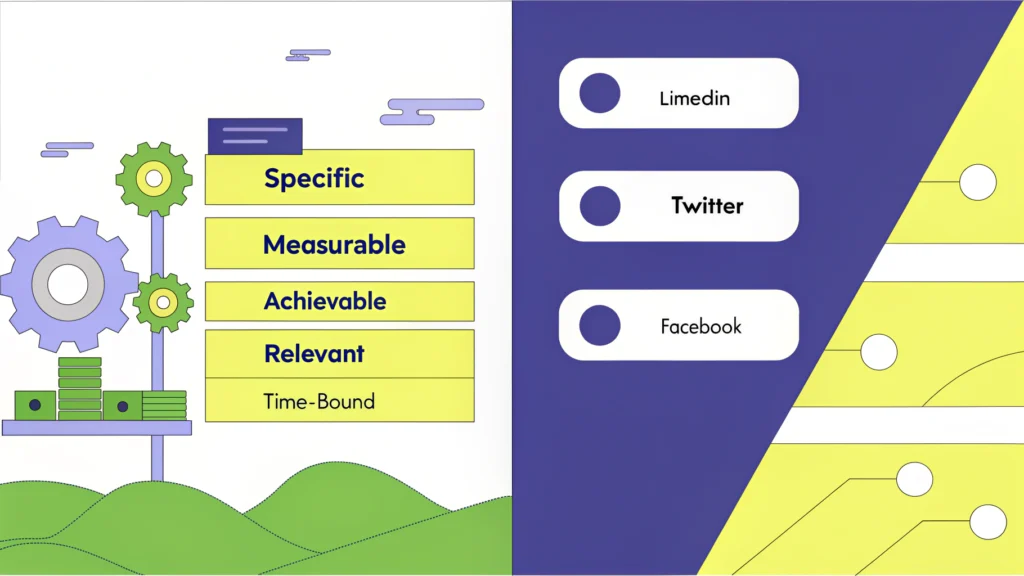
To achieve social workflow optimization for industrial companies effectively, firms must establish clear media objectives that align with their overarching business aims. These objectives should meet the SMART criteria: Specific, Measurable, Achievable, Relevant, and Time-bound. For example, an organization might aim to boost brand recognition by 30% within six months or generate 50 qualified leads each month through online platforms.
Remarkably, 86% of B2B marketers have achieved significant success with LinkedIn, reaching conversion rates up to 2x higher than other platforms. This statistic underscores the potential impact of focused online strategies. Furthermore, HubSpot research indicates that organizations with clearly defined objectives are 376% more likely to report success in marketing on platforms compared to those without them.
By setting such clear objectives, teams can concentrate their efforts on strategies that yield tangible business results. Each piece of content can then serve a distinct purpose, contributing to the organization’s overall success. Effective case studies, such as Fresh Content Society’s collaboration with LINE-X, which garnered over 6 million video views and an impressive 20X return on ad expenditure, illustrate that companies adopting SMART goals not only enhance their online effectiveness but also foster stronger relationships with their target audiences, ultimately driving growth and interaction.
Client testimonials further highlight this impact, with clients noting how Fresh Content Society transformed their social media presence and engagement. To measure the success of these objectives, tracking relevant metrics like engagement rates and conversion rates is essential.
Create Targeted Content for Industrial Audiences
To effectively engage industrial audiences, organizations must create targeted content that directly addresses their specific needs and interests. This includes educational resources such as white papers and case studies that showcase successful projects, alongside informative blog posts that tackle prevalent industry challenges.
Utilizing engaging formats like infographics and videos can significantly enhance audience interaction. For instance, a manufacturing firm could produce a video that illustrates how their product addresses a common industry issue, thereby establishing themselves as a thought leader. By focusing on the audience’s challenges and interests, companies can foster stronger connections and attain greater interaction rates.
Current trends indicate that up to 50% of buyers prefer long-form content, such as white papers, which can effectively attract prospects actively seeking solutions. Additionally, incorporating visuals in content not only improves readability but also increases shareability, making it easier to reach a wider audience.
As B2B marketers adjust to changing interaction patterns, concentrating on these effective content strategies will be vital for driving meaningful connections and fostering brand loyalty.
Establish Key Performance Indicators for Success
Establishing key performance indicators (KPIs) is crucial for evaluating the effectiveness of social workflow optimization for industrial companies in their social media strategies. Companies must identify metrics that align with their specific objectives, such as:
- Participation rates
- Lead generation
- Conversion rates
For instance, if the goal is to enhance brand awareness, monitoring metrics like reach and impressions becomes essential.
Recent statistics reveal that B2B companies achieved a 65% success rate in lead generation via LinkedIn. This underscores the platform’s capability for fostering interaction. Tools like Google Analytics and insights from online platforms provide valuable information on audience behavior and content performance, enabling companies to monitor their progress efficiently.
Regularly reviewing these KPIs allows for real-time adjustments to strategies, ensuring continuous improvement and alignment with overarching business goals. Marketing analysts emphasize that focusing on significant KPIs, such as:
- Interaction rates
- Conversion metrics
is vital for demonstrating the tangible impact of online activities on business results.
Fresh Content Society develops customized strategies for both small and large brands, ensuring measurable growth and interaction within 60-90 days. The effectiveness of Fresh Content Society’s strategies is illustrated by the LINE-X case study, which achieved a remarkable 20X return on ad expenditure and over 6 million video views. This highlights the significant impact of their tailored online marketing solutions.
Select and Optimize Social Media Platforms for B2B Engagement
Choosing the right social media channels is essential for effective B2B interaction. LinkedIn stands out as the premier choice for industrial companies, thanks to its professional focus and robust networking capabilities. Yet, platforms like Twitter and Facebook also contribute significantly to community interaction and brand visibility.
Fresh Content Society underscores the necessity of scaling organic reach through innovative strategies. Consider utilizing:
- Polls
- Native video
- Community engagement on Facebook
to enhance your presence. To maximize impact, ensure that profiles are optimized with relevant keywords, high-quality professional imagery, and concise descriptions that clearly communicate your organization’s value proposition. Regularly updating content and actively engaging with followers through comments and messages can further boost visibility and foster meaningful relationships.
For example, an organization might leverage LinkedIn to share insightful industry content while using Twitter for real-time updates and customer interactions. By implementing a scheduled, consistent posting calendar, integrating real-time trends, and utilizing custom KPI dashboards, companies can build trust and authority across platforms. This approach leads to measurable engagement and follower growth within 60-90 days.
Conclusion
In today’s competitive landscape, optimizing social workflows in industrial companies is not just beneficial – it’s essential. By honing in on specific social media objectives, crafting targeted content, establishing key performance indicators, and selecting the right platforms, organizations can dramatically enhance their online presence and engagement with audiences.
Setting SMART objectives that align with broader business goals is crucial. Companies with clear targets are significantly more likely to succeed in their marketing efforts. Tailored content that resonates with industrial audiences is key; leveraging various formats fosters deeper connections. Moreover, establishing KPIs enables ongoing assessment of strategies, ensuring they remain effective and aligned with desired outcomes.
The significance of these best practices cannot be overstated. Companies that prioritize social workflow optimization are better positioned to engage their target audiences and drive growth. By implementing these strategies, industrial organizations can enhance their brand visibility and build lasting relationships that contribute to long-term success. Embracing these practices is vital for staying competitive and relevant in the industrial sector.
Frequently Asked Questions
What are business-specific social media objectives?
Business-specific social media objectives are clear goals that align with a company’s overall business aims and help optimize social workflow. They should meet the SMART criteria: Specific, Measurable, Achievable, Relevant, and Time-bound.
What is an example of a SMART objective for social media?
An example of a SMART objective could be to boost brand recognition by 30% within six months or to generate 50 qualified leads each month through online platforms.
How successful are B2B marketers using LinkedIn?
Remarkably, 86% of B2B marketers have achieved significant success with LinkedIn, with conversion rates up to 2 times higher than those on other platforms.
What is the impact of having clearly defined social media objectives?
Organizations with clearly defined objectives are 376% more likely to report success in marketing on social media platforms compared to those without defined objectives.
How can setting clear social media objectives benefit a business?
By setting clear objectives, teams can focus their efforts on strategies that yield tangible business results, ensuring that each piece of content serves a distinct purpose and contributes to overall success.
Can you provide an example of a successful case study related to social media objectives?
A successful case study is Fresh Content Society’s collaboration with LINE-X, which garnered over 6 million video views and a 20X return on ad expenditure, demonstrating the effectiveness of adopting SMART goals.
How do client testimonials reflect the impact of social media strategies?
Client testimonials indicate that Fresh Content Society transformed their clients’ social media presence and engagement, highlighting the positive impact of focused social media strategies.
What metrics should be tracked to measure the success of social media objectives?
To measure success, it’s essential to track relevant metrics such as engagement rates and conversion rates.